
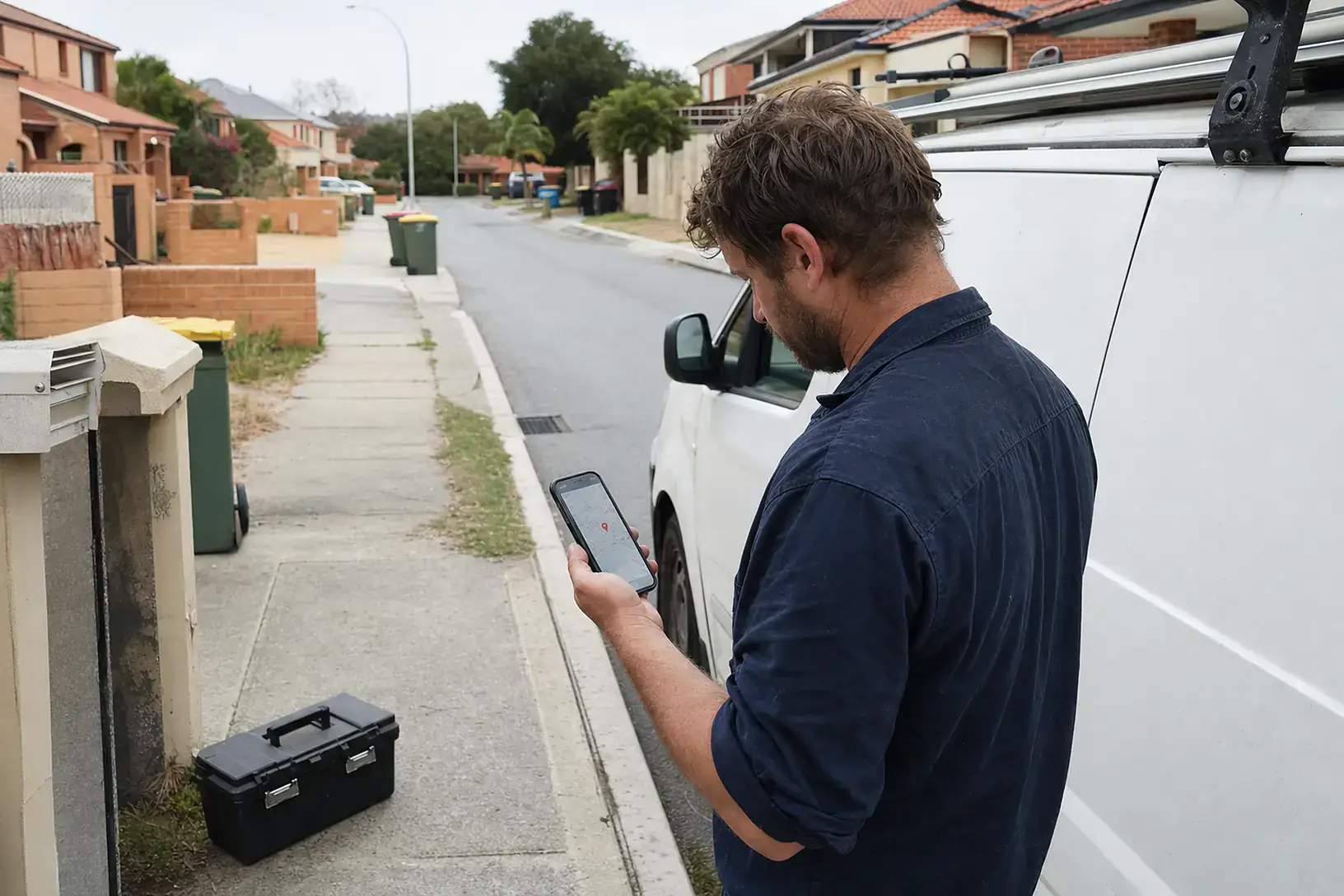
Is Google shrinking your Google Maps ranking radius, meaning how far from your base your listing shows up? In some markets, it looks that way. In late October 2026 the map results started giving much more weight to proximity, which is how close your business is to the person searching. Businesses a few kilometres away dropped out of map results they'd been showing up in for years.
I'm Jacob Frecklington, co-founder of The Lead Gen Lab. A lot of service businesses rely on the map for calls, so a change like this is worth understanding, even before anyone knows whether it'll stick.
What's Changed In The Map Results
The clearest way to see it is a grid scan, which checks where a business ranks on Google Maps from dozens of points spread across a city. Scans taken a week apart in late October showed a pattern like this:
- Whole map packs dropped at once. In one busy market the top business kept first place, but its average rank across the grid (its position averaged over every point in the scan) fell from 2.5 to 16.9.
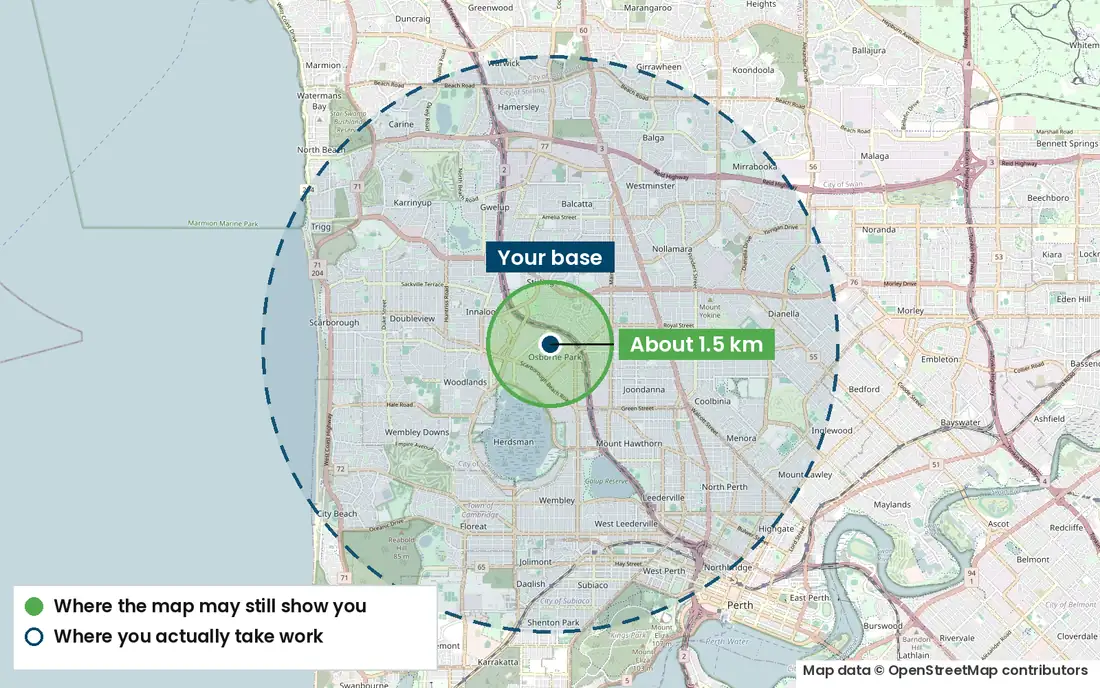
- At many points on the grid, businesses more than about 1.5 km from the searcher fell out of the top results altogether.
- Listings with only a handful of reviews started showing up in their own suburb, because bigger profiles a few kilometres away no longer reached that far.
- Service area businesses, the ones that hide their address and go to the customer, took the biggest hit.
- It showed up across service businesses, including plumbers, locksmiths and air conditioning.
Some businesses with only one listing saw their calls drop. For a service business, calls are the number to watch, because a lower ranking only costs you money if the phone rings less.
We're Seeing It In Perth Too
I've been checking the Google Maps listings we look after for clients in Perth, including ones that used to rank right across the city. Their rankings have dropped quite a bit, and it isn't just one industry. We're seeing it in several service niches, including construction and towing.
Is It Permanent?
Nobody knows yet. Google hasn't confirmed any change, and shifts like this are sometimes pulled back or softened after a few weeks.
Map rankings move around all the time, and you'll usually see your listing ranking well near your address and dropping away the further out you go. If your calls have dipped this month, this could be the reason, but so could the season, a competitor or a change to your own profile. Look at your own numbers before you blame Google.
Why Proximity Matters So Much For Service Businesses
Google says it ranks local results on three things: relevance (does your profile match the search), distance (how far you are from the searcher) and prominence (how well known you are, which includes reviews). This change is Google giving distance much more weight than before.
For a restaurant that makes sense, because nobody drives across town for a pizza. For a service business it's a strange fit. You go to the customer, not the other way round, so a plumber 5 km away can do the job as well as one 1 km away. But Google still measures distance from the address on your profile, not from where you're happy to drive.
So if this sticks, a service business with one listing and a big service area could find their map results only reach the suburbs right around their base. Everything further out would go to whoever is closest to each customer.
What To Do While It Plays Out
These are the same basics we'd always recommend, and they count for more if the map gives each business a smaller area.
Check Your Own Numbers First
Open the performance report in your Google Business Profile and compare calls and direction requests for the last month against the same month last year. Then search your main service from a couple of suburbs you work in, on your phone, with location on. If you used to show up in those suburbs and now only show up near your base, you're seeing the change for yourself.
List Every Service You Do
If your patch gets smaller, the way to get more calls from it is to show up for more searches inside it. Add every service you actually do to your Google Business Profile, and make sure the page your profile links to mentions each one. A fencer who only lists "fencing" misses the person searching for a pool fence or a gate repair down the road.
Keep Getting Reviews From Local Jobs
Reviews still count towards where you rank, so keep asking for them, especially on jobs close to your base. Ask every happy customer, every time, with a link sent the day the job's finished. Don't offer anything in return: Google's rules ban paying for reviews, even with a discount.
Lean Harder On Your Website
The normal search results under the map rank websites, and they depend much less on how close your address is to the searcher. A website with a proper page for each service you do, and pages for the areas you genuinely cover, can still win searches the map no longer gives you. That's the work behind our marketing for tradies, and it's why we treat the map as one source of calls, not the only one.
Get People Searching For Your Name
When someone searches your business name, distance barely matters, because they're looking for you. Signwriting on your vehicles and a sign out the front of every job both get more people searching your name over time.
Open A Second Base If You're Ready
If proximity keeps counting this much, the service businesses that show up across the most suburbs will be the ones with more than one real base. A plumber working out of Osborne Park with a second yard in Rockingham gets two patches on the map instead of one, and each base has its own customers close by.
It has to be a genuine location: a depot, workshop or yard your team actually works from, with its own address, its own Google Business Profile and its own reviews from nearby jobs. Google has to verify every new profile, so make sure you can do that at the address before you sign a lease.
Pick the spot from your own numbers. Look at where your best jobs already come from and where you're driving furthest, and put the base there. If a second base was already on the cards, this is a good reason to bring it forward.
What Not To Do
A second base only works if it's real. Please don't rush out and set up listings at a mate's house, a virtual office or a mailbox. Google's guidelines say a business profile needs a real address where you actually operate, and fake listings get suspended. Google can suspend your real listing too, and it won't bring in calls until that's sorted.
Also don't make big changes to your profile in a panic. If the change is pulled back in a few weeks, you'll have rewritten everything for nothing, and you won't know which change did what.
Questions We Get About Google Maps Rankings
No. As of 1 November 2026, Google hasn't confirmed any change. The shift has shown up in rank tracking, not in any announcement.
There's no fixed distance. It depends on how many similar businesses are near you and how strong your profile is. In a busy area it can be a couple of kilometres; with little competition it can be much further.
You can set the areas you serve on your profile, and you should list the real ones. But Google still measures distance from your address, so a bigger service area on its own won't push your map rankings further out.
It can, if it's a real base your team works from, with its own address that Google can verify. Each base gets its own patch on the map. A listing at an address where you don't really work is against Google's guidelines and risks both listings.
More than before. The normal search results under the map can bring you calls from suburbs your listing no longer reaches. A proper page for each service and area you cover gives your site the best chance there.
Ready For More Quality Leads?
Apply for the Lead Launch Program and start getting exclusive, high-intent enquiries sent straight to you, with no shared leads and no bidding wars.