The Lead Gen Lab logo

Construction Website Design

Google5.0

Construction Websites Built To Win Work.

The Lead Gen Lab builds construction websites for Australian building and civil contractors, structured around your sectors and your projects. Every page makes it clear what you build, who you build it for, and why you can be trusted with a job that size.

Projects with real detail, your capability and compliance in one place, and a careers page that actually brings people in.

First draft in 14 days, most projects live in two to four weeks, and no lock-in contract.

Flat illustration of a construction professional in a hard hat holding rolled plans beside a browser window showing a construction company website.

14 days

to your first draft. Most projects are live in two to four weeks.

Quoted first

You see the full price and what is included, in writing, before anything is built.

No lock-in

contract. Hosting included or arranged separately, whichever suits.

Two People Read A Construction Website

One is deciding whether to put you on a shortlist. The other is deciding whether to work for you. Most construction sites are built for neither.

The client

Developers, architects, project managers, head contractors

They are checking whether you have done work at this scale before, and whether you are safe to put in front of their own client. They are not going to ring. They will read, decide, and email one person.

What they need from the site

  • Projects with the sector, the scale and what you actually did
  • Accreditations, licences and insurance levels in one place
  • Your safety systems, because it is the first thing a head contractor checks
  • A named contact for enquiries, not a general form

The person you want to hire

Site supervisors, leading hands, apprentices, subcontractors

Every construction business in the country is short of good people, and they look you up before they apply. What the site says about the work and the culture decides whether they bother.

What they need from the site

  • Current roles, and a way to apply that is not an email address in a paragraph
  • The kind of projects they would be working on
  • Something honest about the team and how you run a site
  • A subcontractor registration path, kept separate from job applications

What Is Probably Wrong With Your Website

Most construction websites are not badly designed. They are just brochures, written for nobody in particular, and they have not been touched since the last rebrand.

  • Your projects

    Most construction sites

    A grid of photos with a name under each one and nothing else.

    The one we build

    A page each, with the sector, the scale, the scope, the duration and what made it difficult.

  • What you actually do

    Most construction sites

    Commercial, industrial and residential, listed as three words on the homepage.

    The one we build

    A page per sector or service, because that is how a project manager searches and what they need to read.

  • Capability

    Most construction sites

    A PDF capability statement you have to ask for.

    The one we build

    On the site, readable, current, and downloadable for the people who still want the PDF.

  • Safety and compliance

    Most construction sites

    A paragraph saying safety is a priority.

    The one we build

    Your accreditations, your licence numbers, your insurance levels and your systems, stated plainly.

  • Careers

    Most construction sites

    One line saying to send a resume to info@.

    The one we build

    Real roles, a proper application form, and a separate path for subcontractors.

  • Enquiries

    Most construction sites

    A contact form that lands in a shared inbox nobody reads.

    The one we build

    Routed to the right person, with the fields an estimator needs before replying.

They Are Built To Get Found

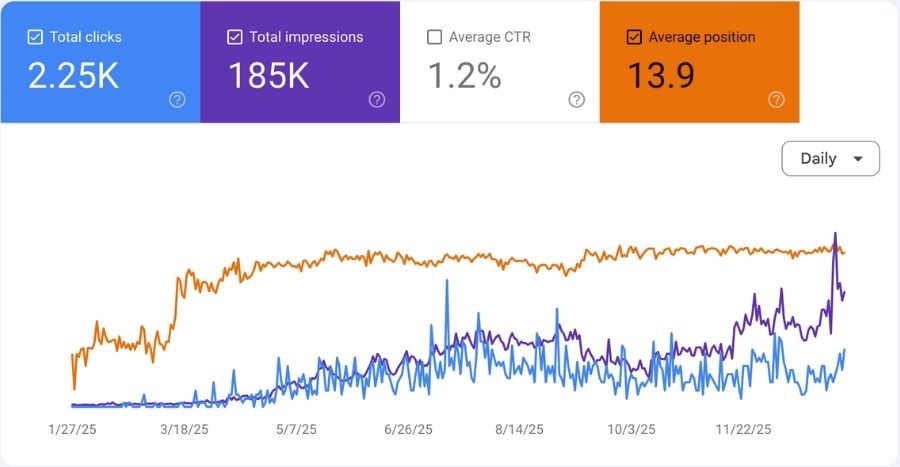
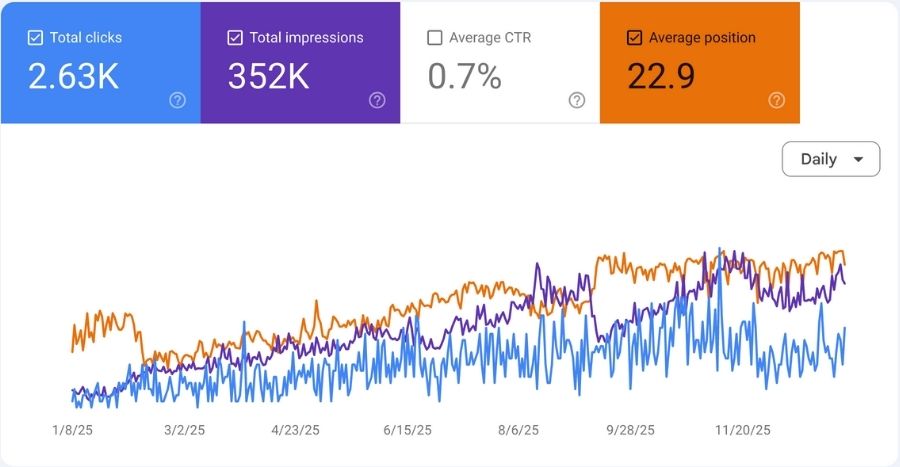
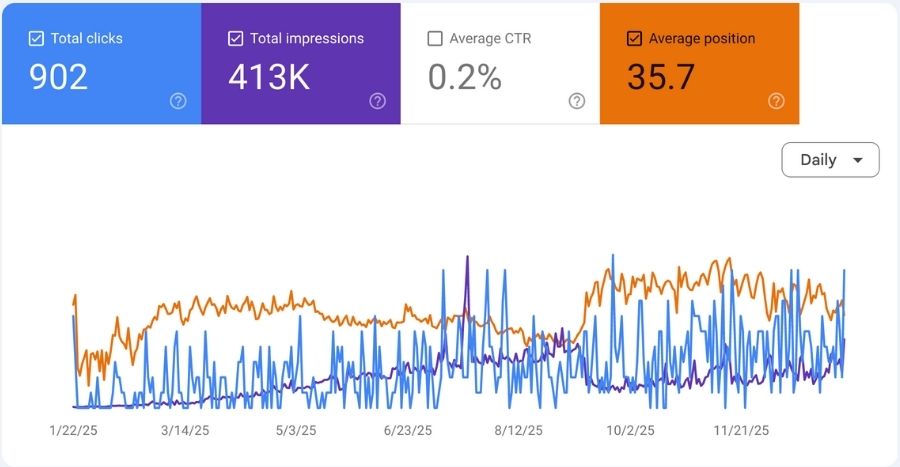
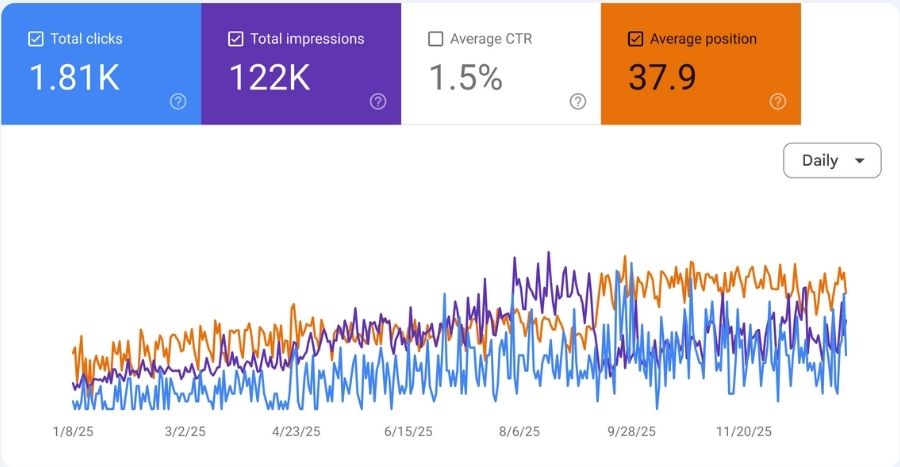
A construction website is only worth anything if the right people find it. These are Search Console screenshots from sites we have built, showing clicks and impressions over time.

What matters is the trend rather than the totals. Steady growth on service and location searches is what a construction site should do.

Google Search Console performance data for a client construction website
Google Search Console performance data showing clicks and impressions growth
Google Search Console performance data for a service business website
Google Search Console performance data showing rising search visibility
Google Search Console performance data for a trade business website

Your Website Is A Capability Statement

In construction the decision is made before anyone speaks to you. Someone is checking whether you can be trusted with a job of this size and whether putting you forward is a risk to them.

That is not a feeling you can create with a photo gallery. It comes from specifics, and these are the ones that carry weight.

  • Projects with numbers on them

    Sector, contract value band, duration, delivery method and the scope you held. A photo of a finished building proves nothing. The detail underneath it is what gets read.

  • Accreditations, current and named

    Quality, environmental and safety certifications, your builder registration and any scheme accreditations. Named, numbered and dated, because an expired certificate on a live site is worse than none.

  • Insurance levels, in figures

    Public liability, contract works and professional indemnity, with the cover amounts. Every prequalification form asks for them, so putting them on the site saves a round of emails.

  • How you run safety

    Your safety management system, your inductions and your incident reporting. This is the first thing a head contractor's compliance team looks for, and most sites leave them guessing.

  • The people, with their experience

    Directors and senior staff with the years and the sectors behind them. On a project of any size the client is buying the team, and a page of stock photos does not tell them who that is.

  • Clients and repeat work

    Who you have built for, and where you have been engaged more than once. Repeat work is the strongest signal in construction and almost nobody says it out loud.

What Goes On A Construction Website

Construction website design follows a structure, and it is not the structure of a trade site. Here are the six parts that matter most, and what each one does.

  1. Under the hood

    Built so Google can read it

    Clean structure, proper headings, service and project markup, and fast loading. This will not rank the week it launches, but nothing ranks later without it.

  2. The top of the page

    What you build, and at what scale, immediately

    A project manager decides in seconds whether you are the right size for the job. Sector, scale and region belong above the fold, not three clicks in behind a slideshow.

  3. Sector pages

    A page for each sector you work in

    Commercial fitout, industrial, civil, aged care, education. Each is a different buyer with different concerns, and each is searched separately. One capability page cannot rank for all of them.

  4. Project pages

    Projects with the detail underneath

    Sector, value band, duration, scope and the problem you solved. This is the section clients read hardest, and it is the section most construction sites leave as a photo grid.

  5. The enquiry form

    A form that reaches an estimator

    Project type, location, approximate value and timeframe, routed to the person who can answer it. Not a message box landing in a shared inbox.

  6. Careers

    A careers page that is worth visiting

    Current roles, a real application form and a separate subcontractor registration. In this industry the site earns its keep on hiring as much as on winning work.

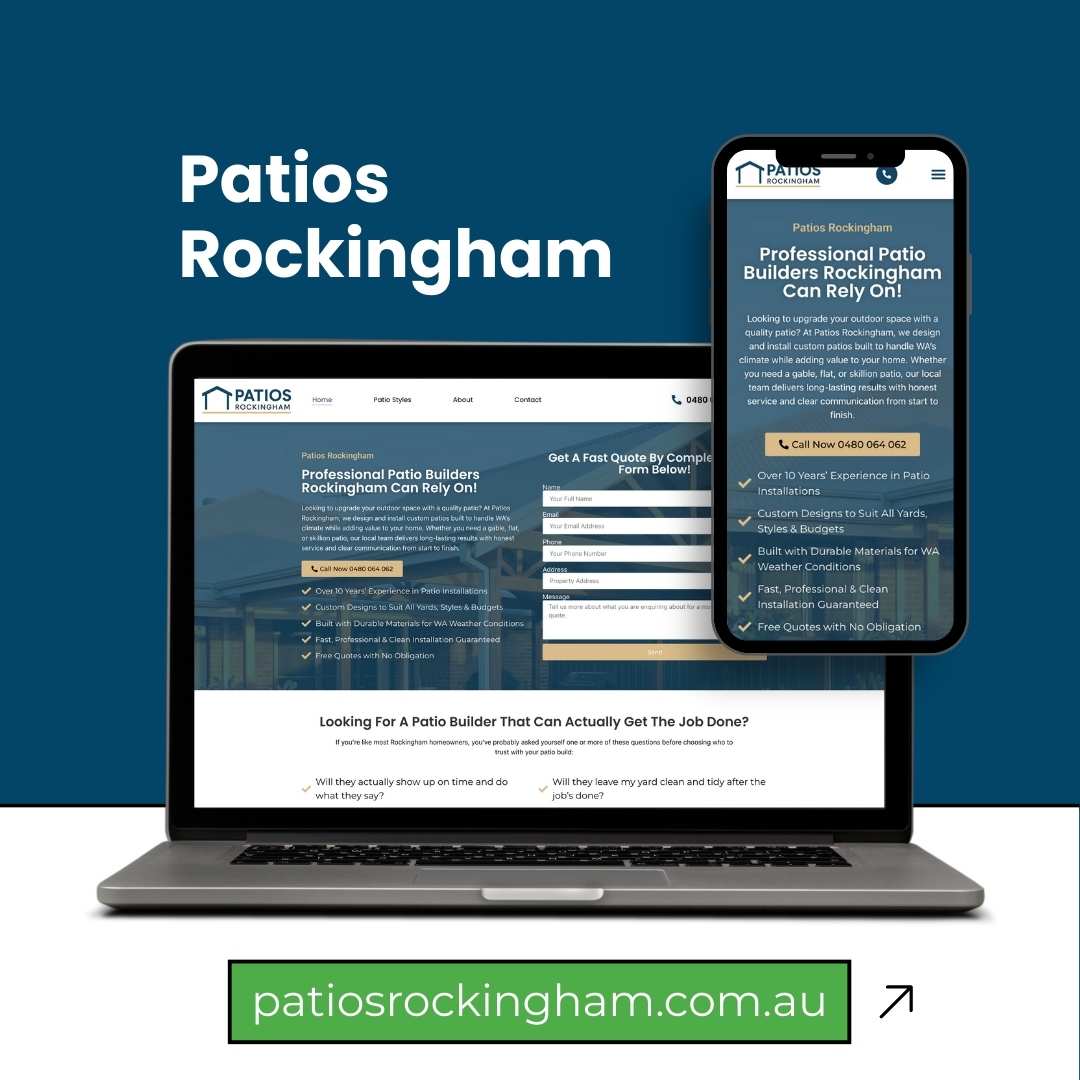
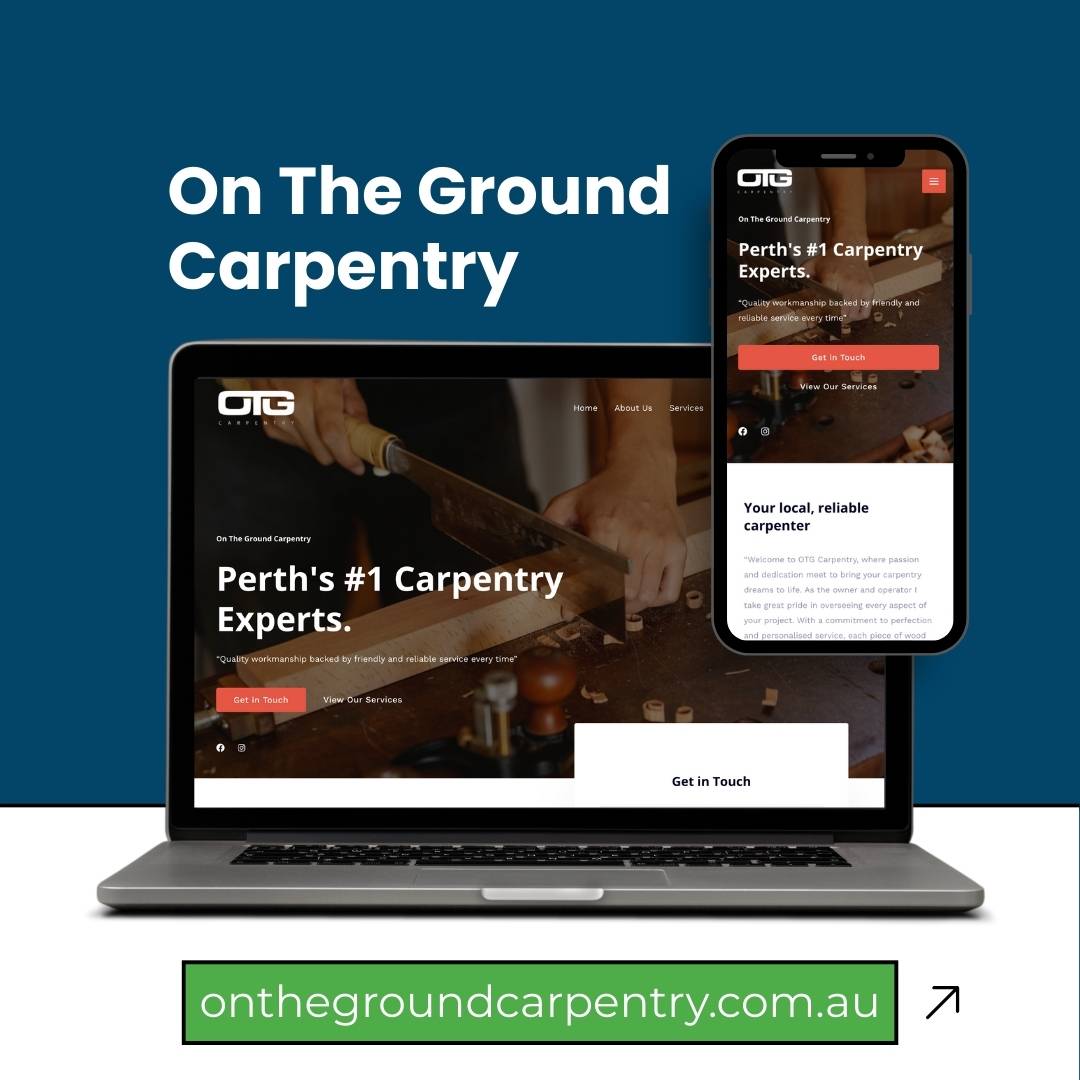
Sites We Have Built

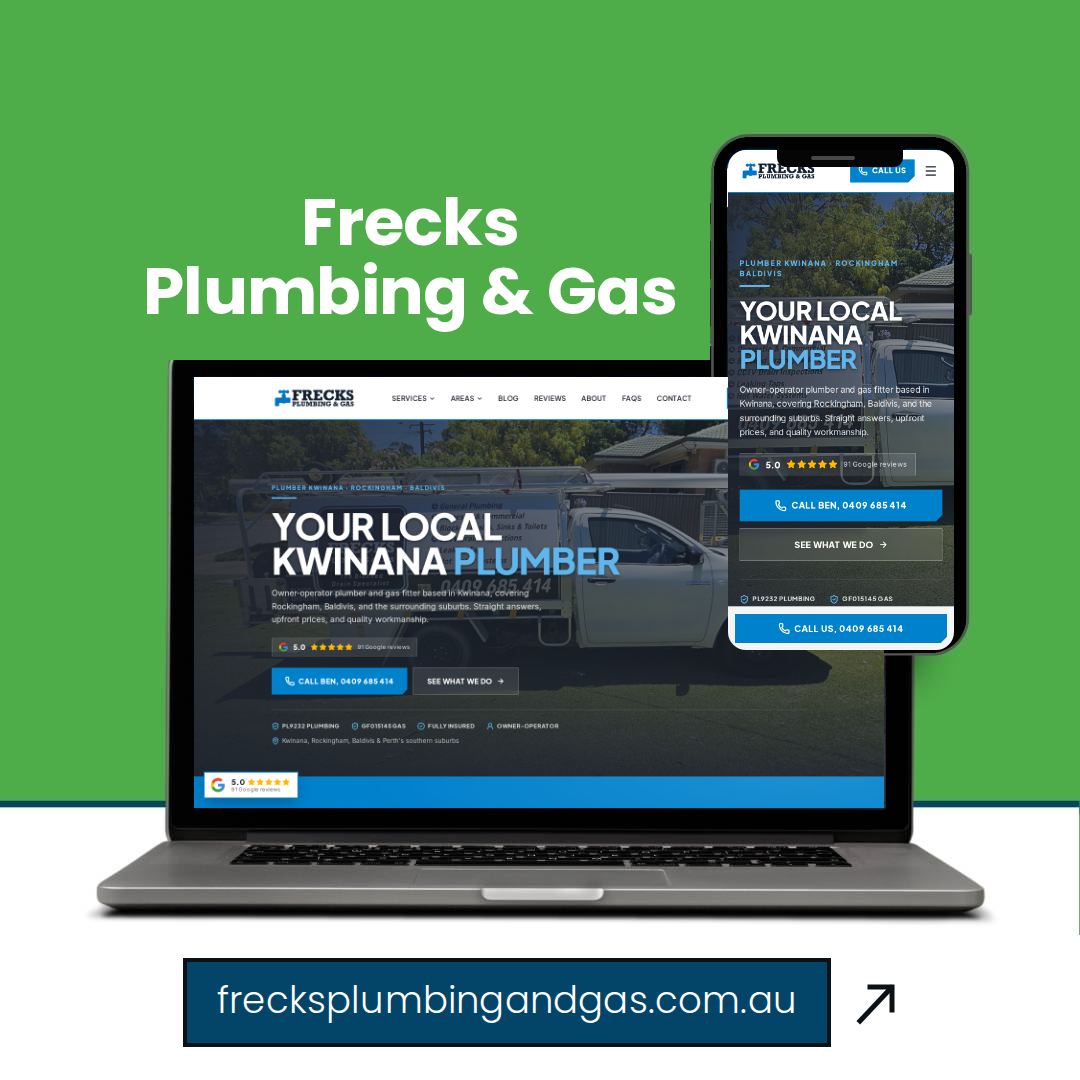
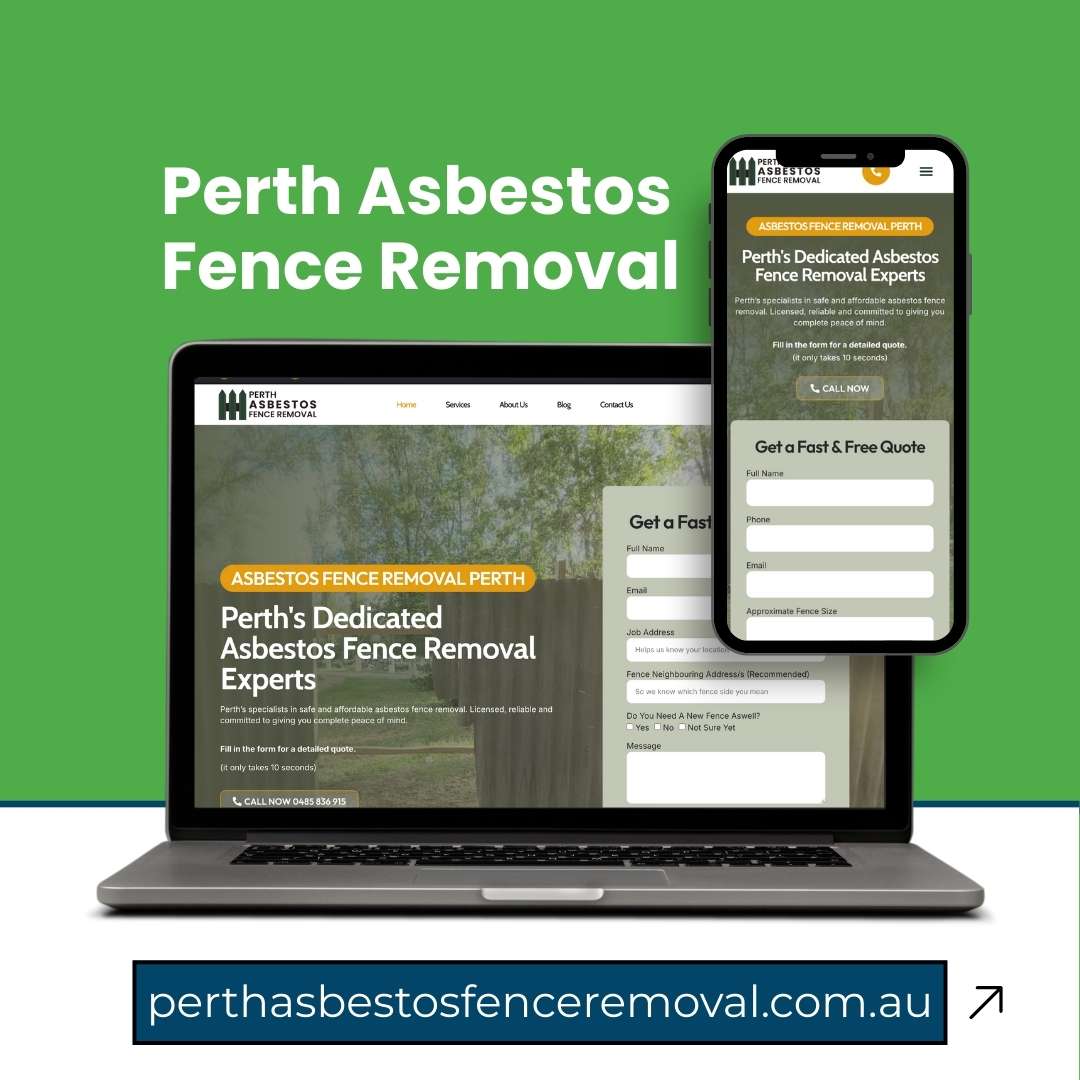
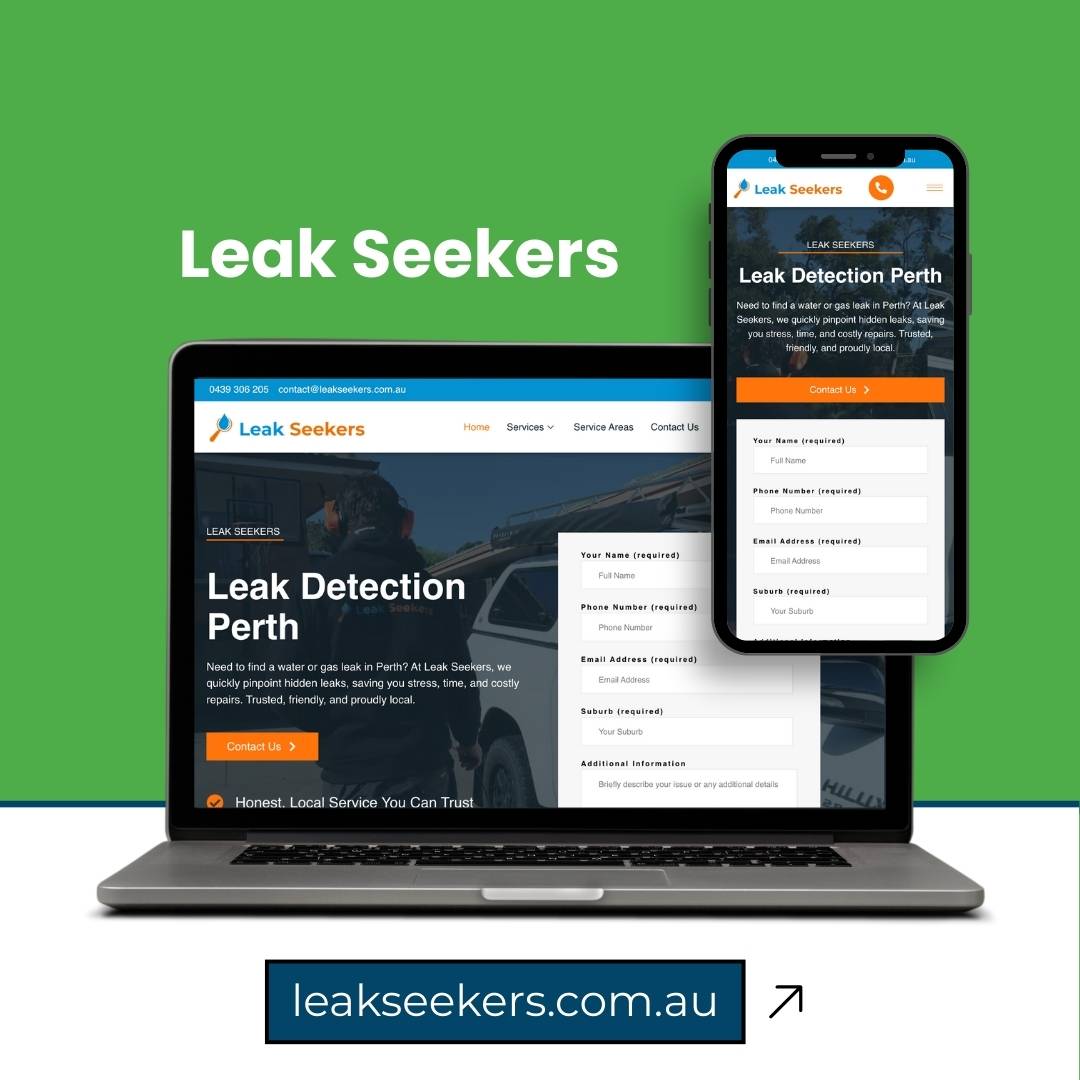
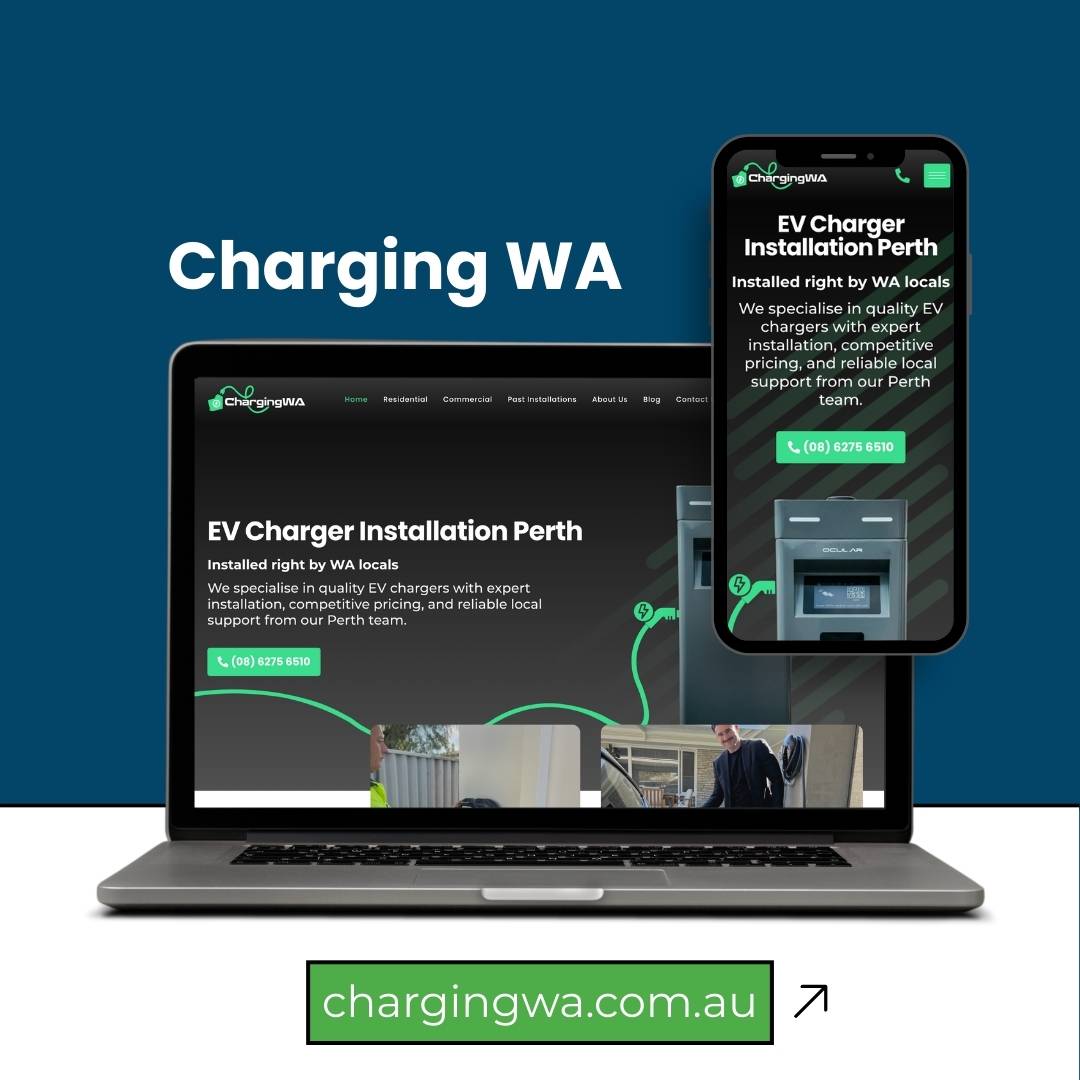
Recent websites we have built for construction and trade businesses. Each one is built around the work that business does and the clients it wants.

5.0

on Google

What Our Clients Say

Want To Know What Yours Would Cost?

Tell us the sectors you work in and the projects you want more of, and we will come back with the structure and the price before anything starts.

How It Runs

Four steps, and the first one is the only one that needs much of your time.

  1. A short call

    We go through your sectors, your projects and the work you want more of. Usually fifteen minutes.

  2. Structure and content

    We plan the pages around how clients and candidates actually look you up. You send us the project details.

  3. Build and review

    We build the site and send it over for you to check. Changes are made before it goes live.

  4. Launch and hand over

    We connect your domain, check everything works and hand it over. Support after that is optional.

FAQs About Construction Website Design

The buyer. A tradie site is built to get a phone call from a homeowner. A construction site is built to survive being checked by a project manager, an architect or a head contractor's compliance team before anyone speaks to you.

That means projects with real detail, your accreditations and insurance levels in one place, and an enquiry that reaches an estimator rather than a shared inbox. It also means careers matters, because in this industry the website earns its keep on hiring too.

Every site is quoted on what it actually needs: how many sectors you cover, how many projects go on it, and what has to be built. You get the full price in writing before any work starts.

There is no lock-in contract. Ongoing services like support and hosting are quoted separately, so you can take them or leave them.

You get the first draft within 14 days. Most projects finish in two to four weeks, depending mostly on how quickly you can give feedback and get us the project details.

No, and it is common. Plenty of work is under confidentiality, or the client will not allow the name to be used.

A project can be written up as a sector, a value band, a scope and a location without naming anyone, and that still does the job. What a reader is checking is whether you have done this size of work, not who signed the contract.

Yes, as pages rather than only as a PDF. A PDF cannot be found in a search, cannot be linked to and goes out of date quietly.

Keep the PDF for the people who ask for one, and have the same information readable on the site for everyone who does not.

That is often the change worth making. Candidates look you up before they apply and subcontractors look you up before they register, and a one line careers page tells them nothing.

Real roles, an application form that works on a phone, and a separate subcontractor path is usually a short piece of work with a disproportionate effect.

Sometimes, and less than a trade business does. Construction searches are more often about the sector and the type of work than the suburb, so sector pages usually earn their place first.

If you are targeting particular regions or councils it can be worth it. We work that out on the first call rather than building them by default.

It is built so it can. Clean structure, proper headings, sector and project pages, and fast loading are all in place from launch.

How quickly it ranks depends on your region, your competition and what happens after launch. Nobody can promise you a position by a certain date.

Keeping the project list current is the single most useful thing you can do with the site after launch, so it is worth agreeing how that happens before it goes live.

You tell us and it gets done, or we set up ongoing support so it is handled as a matter of course. We go through the options on the first call.

Yes. We connect the new site to your existing domain and email, or help you change them if you want to.

Ready For A Construction Website That Wins Work?

Tell us the sectors you work in and the projects you want more of, and we will come back with what the site would include and what it would cost.

No obligation, and no lock-in contract if you go ahead.

  • First draft in 14 days and you see it before anything else is agreed.
  • One written price covering the whole build, given before we start.
  • Nothing to sign up to afterwards. Support and hosting stay optional.

Would rather just talk it through?

1300 684 885
Call NowEnquire Now