The Lead Gen Lab logo

Home Builder Website Design

Google5.0

Home Builder Websites Built To Sell Homes.

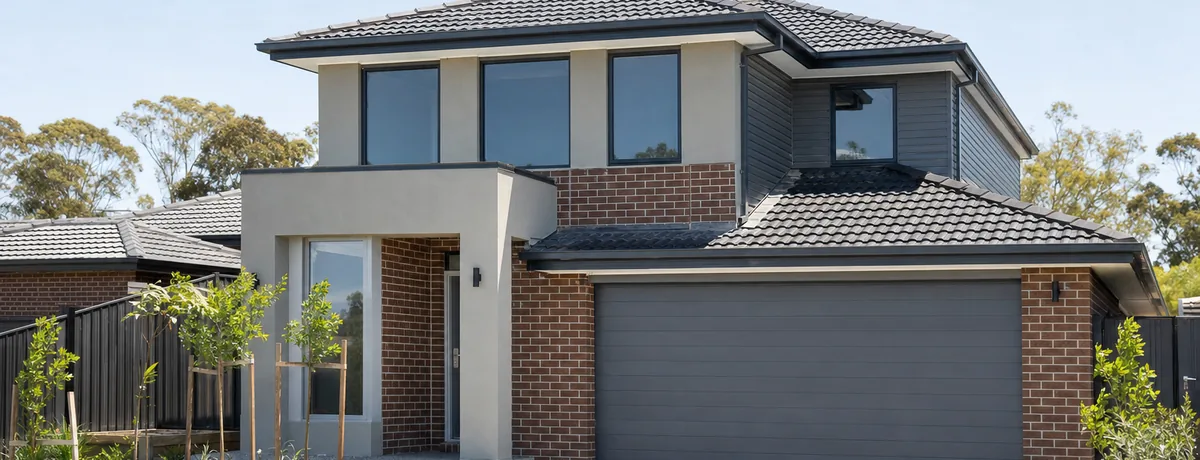
The Lead Gen Lab designs home builder websites for Australian residential builders, structured around your ranges and your inclusions. Every page makes it easy to look through your homes, understand what comes with one, and picture living in it.

Home designs that work like product pages, floor plans people can actually read, and an inclusions list that answers the question everyone is really asking.

First draft in 14 days, most projects live in two to four weeks, and no lock-in contract.

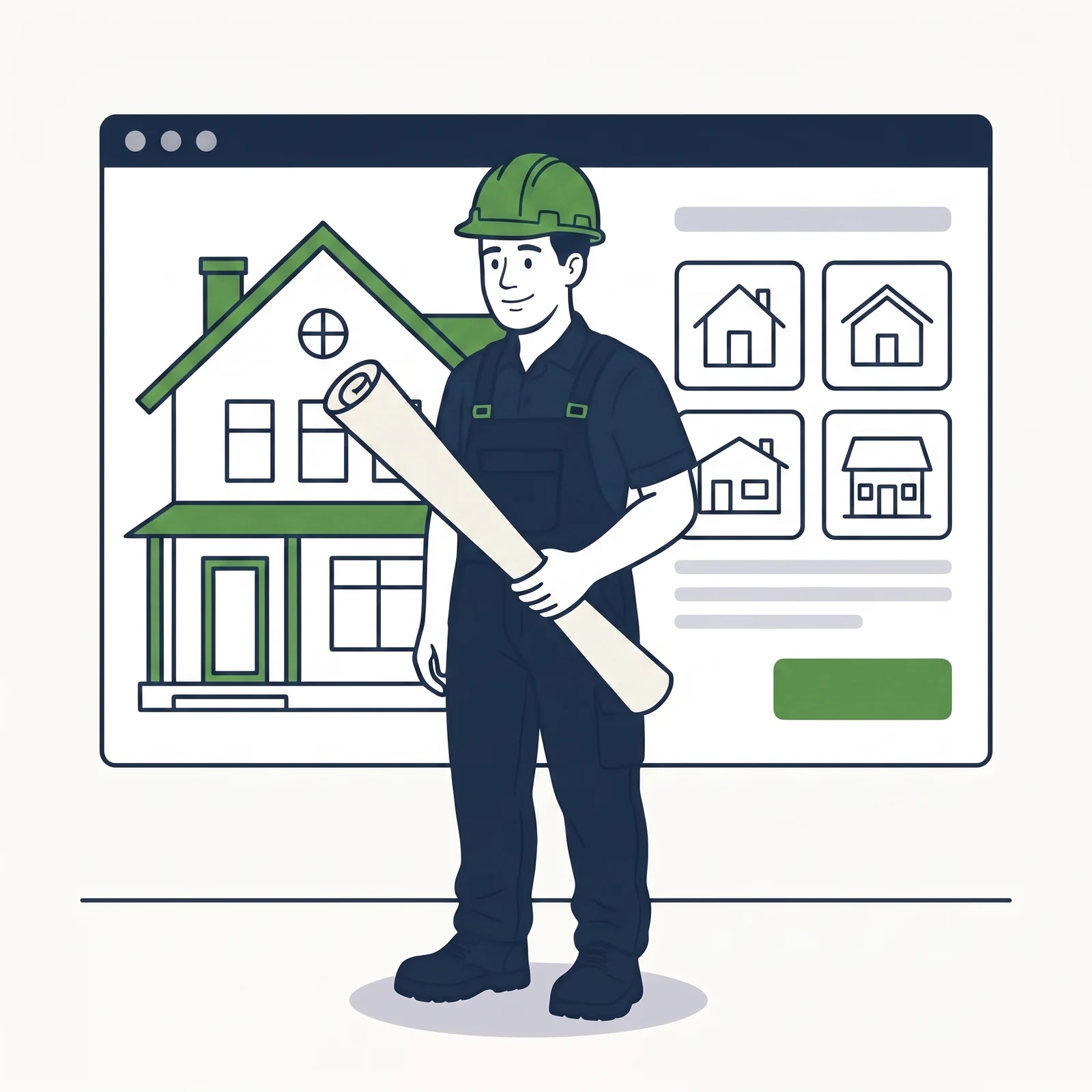
Flat illustration of a builder in a hard hat holding a floor plan beside a browser window showing a home builder website with home design tiles.

14 days

to your first draft. Most projects are live in two to four weeks.

Quoted first

You see the full price and what is included, in writing, before anything is built.

No lock-in

contract. Hosting included or arranged separately, whichever suits.

A Year Out, And Ready To Sign

Building a home is the longest decision your customer will ever make. The same website has to serve someone at the start of it and someone at the end.

A year out

Collecting ideas, no land yet, no idea what anything costs

They are browsing on a couch, saving floor plans and sending them to their partner. They will visit your site a dozen times before they contact anyone, and they will not fill in a form for months.

What they need from the site

  • Home designs they can browse by size, storeys and bedrooms
  • Floor plans that are readable on a phone, not a PDF that downloads
  • Some idea of price ranges so they can work out what is realistic
  • Something to save or share, because they are not deciding alone

Ready to sign

Has a block or a package in mind, comparing two or three builders

They are down to a shortlist and reading inclusions lists side by side. Every difference they cannot resolve on your site becomes a phone call to someone else, or a reason to stop.

What they need from the site

  • The full inclusions list, in detail, not a highlights summary
  • What the build process looks like and how long it takes
  • Your registration, your warranties and your indemnity insurance
  • Display home addresses and opening hours that are actually current

What Is Probably Wrong With Your Website

Most home builder websites are not badly designed. They are just built to be admired for thirty seconds rather than used for eight months.

  • Home designs

    Most home builder sites

    A grid of renders with a name and a bedroom count.

    The one we build

    A page each, with the floor plan, the dimensions, the frontage, the variations and what it suits.

  • Floor plans

    Most home builder sites

    A PDF that downloads and cannot be read on a phone.

    The one we build

    On the page, zoomable, and readable on the device most people are using.

  • Inclusions

    Most home builder sites

    A highlights list of eight bullet points.

    The one we build

    The full list, in detail, because that is where a shortlist decision is actually made.

  • Price

    Most home builder sites

    Nothing anywhere, so every early visitor leaves to find out elsewhere.

    The one we build

    Ranges or from-prices where you are willing to give them, with what moves the number explained.

  • Display homes

    Most home builder sites

    An address and a photo, with opening hours that were right two years ago.

    The one we build

    Current hours, a map, what is on show and which design it is, kept up to date.

  • Speed on a phone

    Most home builder sites

    Full screen renders and video that take ten seconds to load on mobile data.

    The one we build

    Built to load fast on a phone, with the images compressed properly and loaded as they are needed.

They Are Built To Get Found

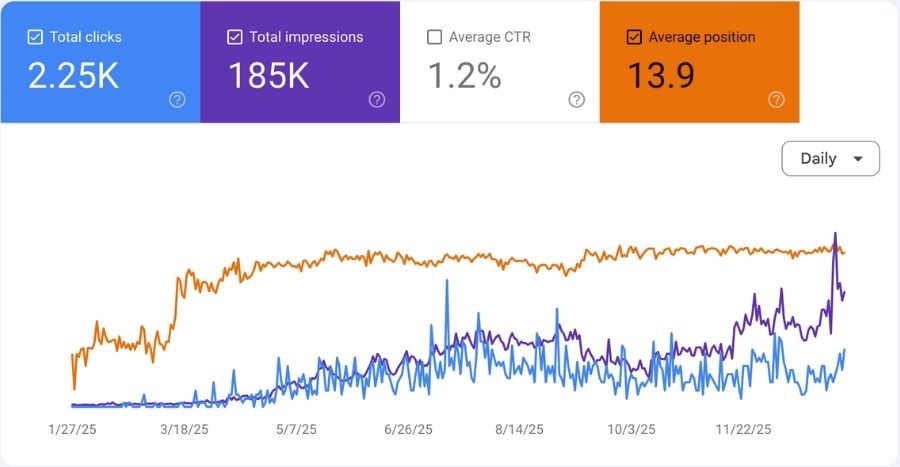
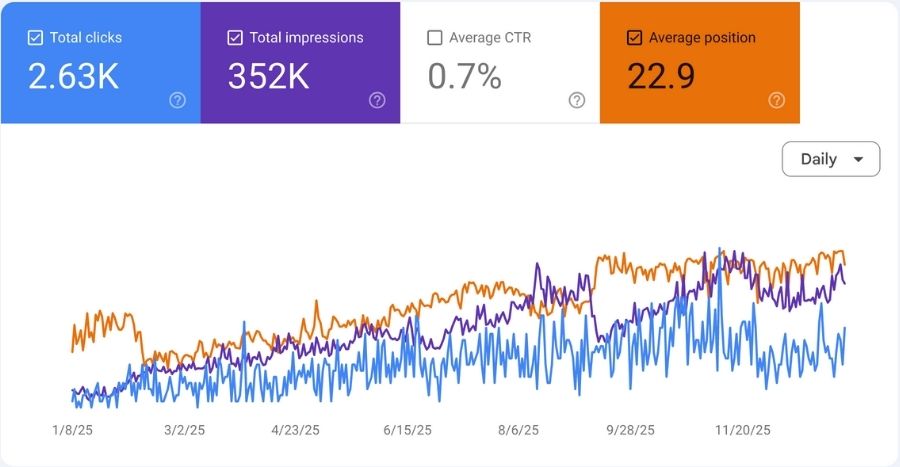
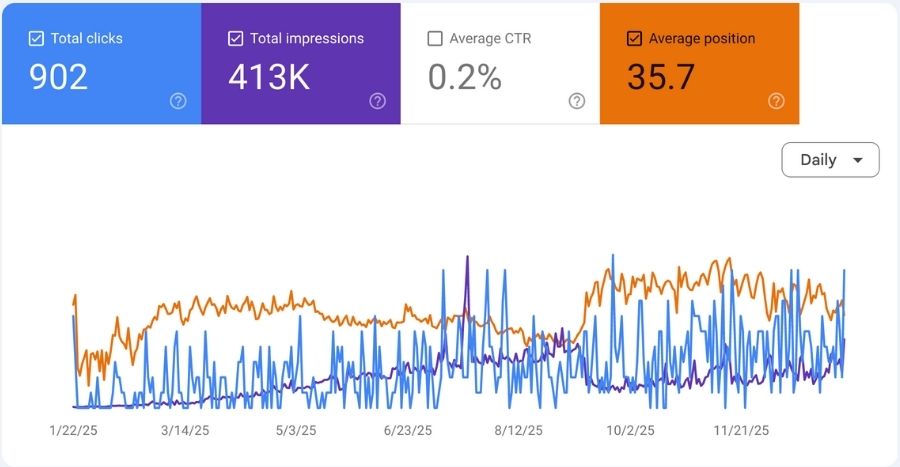
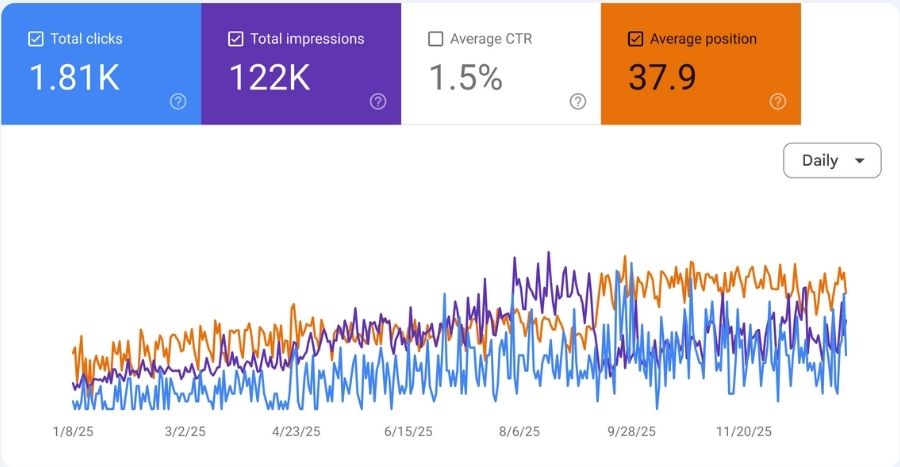
A home builder website is only worth anything if people find it. These are Search Console screenshots from sites we have built, showing clicks and impressions over time.

What matters is the trend rather than the totals. Steady growth on design and location searches is what a builder's site should do.

Google Search Console performance data for a client builder website
Google Search Console performance data showing clicks and impressions growth
Google Search Console performance data for a service business website
Google Search Console performance data showing rising search visibility
Google Search Console performance data for a trade business website

Floor Plans And Inclusions Are The Content

A home builder's website is closer to a catalogue than to a trade site. The homes are the product pages, and the things people compare are specific and unglamorous.

Renders sell the feeling. These sell the decision.

  • A page per home design

    Floor plan, dimensions, minimum block width, storeys, the variations available and who it suits. People search designs by name and by size, and a grid of renders cannot turn up for either.

  • The full inclusions list

    Not the highlights. When someone is choosing between two builders, they are reading both lists line by line, and the one that hides it loses by default.

  • Price ranges, if you can give them

    A price nobody can find is the most common reason an early visitor leaves. A range, with what moves it, keeps them on your site instead of on a forum asking strangers.

  • Registration, warranty and indemnity

    Your builder registration number, the structural warranty and your home indemnity insurance. On a purchase this size people check, and they are reassured that they did not have to ask.

  • What the build actually looks like

    The stages from contract to handover, roughly how long each takes and what you need from them. It is the question every first home buyer is too embarrassed to ask.

  • Display homes, kept current

    Address, opening hours, which design is on show and what has been upgraded. An out of date opening time is the one mistake that costs you a Saturday visit you had already won.

What Goes On A Home Builder Website

Home builder website design follows a structure, and it is not the structure of a trade site. Here are the six parts that matter most, and what each one does.

  1. Under the hood

    Built so Google can read it

    Clean structure, proper headings, product and location markup, and fast loading. This will not rank the week it launches, but nothing ranks later without it.

  2. The top of the page

    Straight into the homes

    The first thing a visitor wants is to look at houses. Filtering by bedrooms, storeys and block width belongs above the fold, not behind a full screen video of a hallway.

  3. Home design pages

    Every design is a product page

    Floor plan, dimensions, frontage, variations and price guidance. Designs get searched by name, and a render in a grid cannot rank for one.

  4. Region and estate pages

    The areas and estates you build in

    House and land searches are tied to a suburb or an estate. Each region you build in gets a real page rather than a line in a dropdown.

  5. The enquiry form

    A form that matches where they are

    Someone a year out will not ask for a quote. Give them a way to register interest or book a display home visit, and keep the full quote form for people who are ready.

  6. The contact bar

    Display homes, one tap away

    Fixed to the bottom of the screen on mobile, with your number and your display home locations. A Saturday visit is worth more than a form fill and it is easier to ask for.

Sites We Have Built

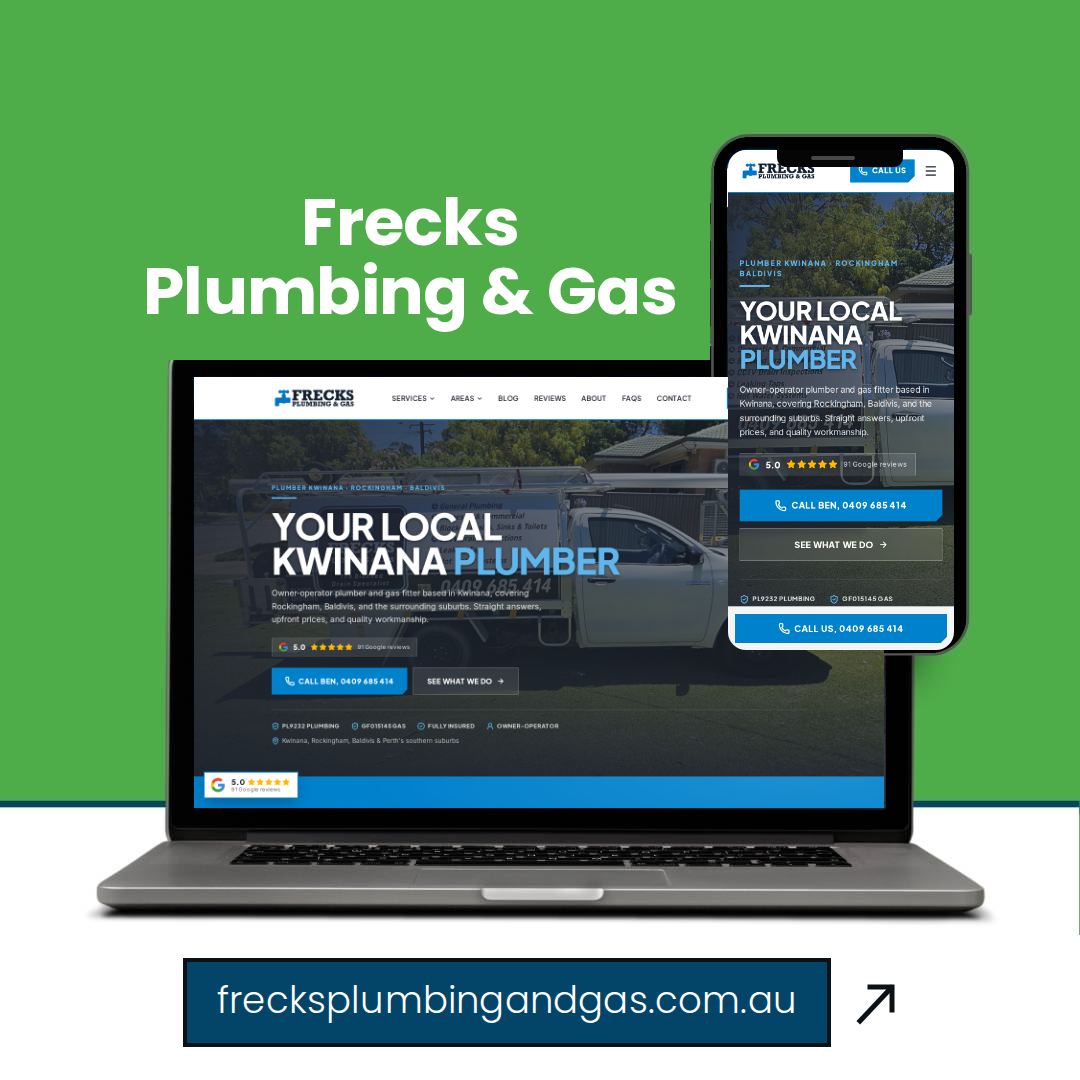
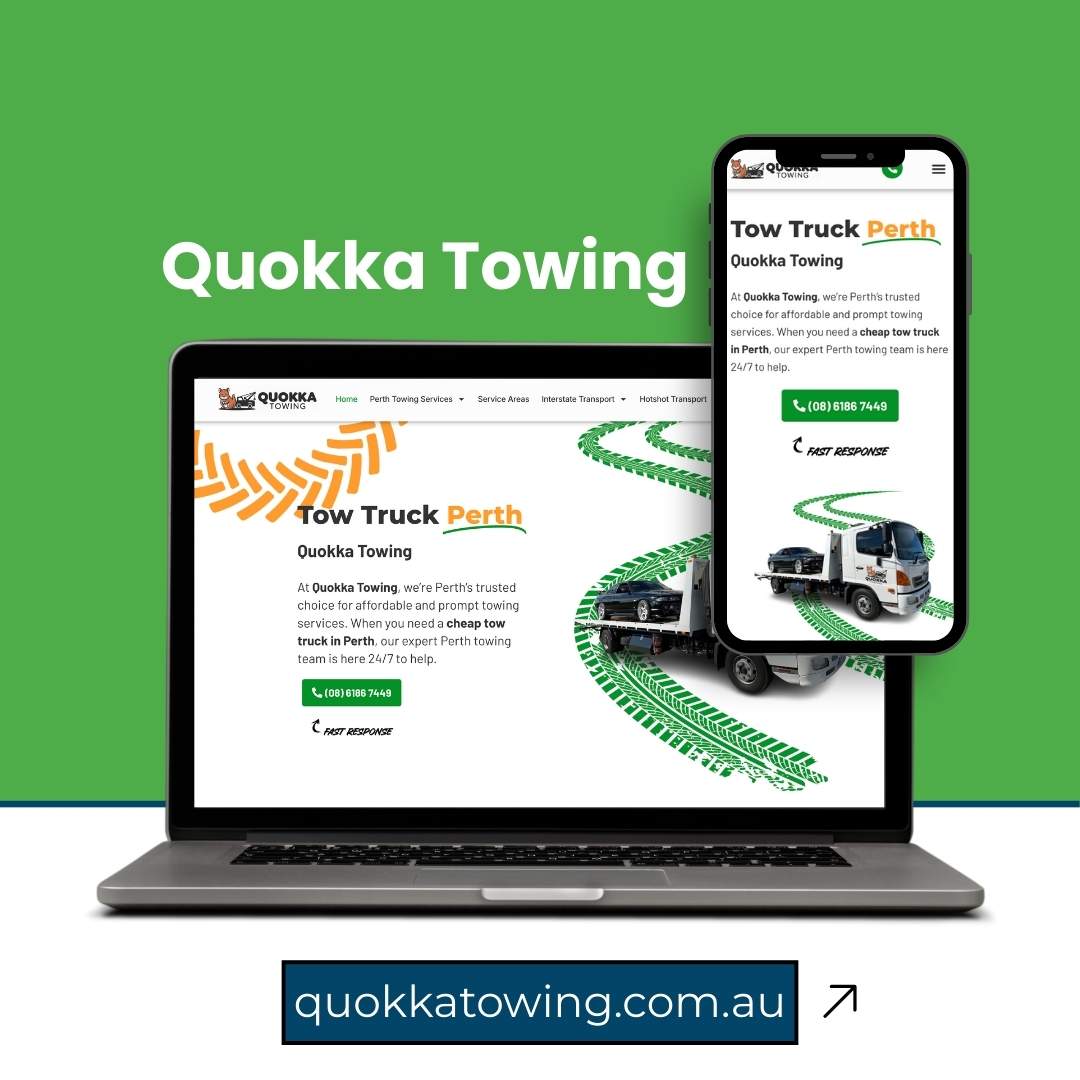
Recent websites we have built for builders and other trades. Each one is built around the work that business does and the areas it covers.

5.0

on Google

What Our Clients Say

Want To Know What Yours Would Cost?

Tell us how many home designs you build and the regions you cover, and we will come back with the structure and the price before anything starts.

How It Runs

Four steps, and the first one is the only one that needs much of your time.

  1. A short call

    We go through your home designs, your regions and your display homes. Usually fifteen minutes.

  2. Structure and content

    We plan the pages around how people actually shop for a home. You send us the plans, the inclusions and the renders.

  3. Build and review

    We build the site and send it over for you to check. Changes are made before it goes live.

  4. Launch and hand over

    We connect your domain, check everything works and hand it over. Support after that is optional.

FAQs About Home Builder Website Design

The length of the decision. A tradie site is built to get a phone call today. Yours has to be useful to someone who will visit it fifteen times over eight months, send floor plans to their partner and compare your inclusions against two other builders.

That makes it closer to a catalogue than a lead form. The home designs are product pages, the floor plan is the thing that gets saved, and the inclusions list is where the decision is actually made.

Every site is quoted on what it actually needs: how many home designs go on it, how many regions you cover, and what has to be built. You get the full price in writing before any work starts.

There is no lock-in contract. Ongoing services like support and hosting are quoted separately, so you can take them or leave them.

You get the first draft within 14 days. Most projects finish in two to four weeks, depending mostly on how quickly you can give feedback and get us the plans and renders.

No, and plenty of builders do not. It is worth knowing what it costs you though: a price nobody can find is the most common reason an early visitor leaves, and they usually leave to a forum rather than to your competitor.

A from-price or a range, with what moves the number explained, is often enough. It is your call and we will build it either way.

If you are on a shortlist, the person is reading two inclusions lists side by side, and the builder who makes theirs hard to find is the one who gets ruled out first.

Putting the detail on the page also means it turns up in searches for specific inclusions, which a downloadable PDF never does.

That is usually the first thing worth fixing. Most people arrive knowing roughly what they need, and a grid of renders in no order makes them do the sorting themselves.

Filtering by bedrooms, storeys and block width, with each design on its own page, is what turns a gallery into something people come back to.

House and land searching is tied to a suburb or an estate, so the regions worth targeting get a real page each rather than a line in a dropdown.

Which ones, and how many, is part of what we scope and quote before anything starts.

It is built so it can. Clean structure, proper headings, design and region pages, and fast loading are all in place from launch.

How quickly it ranks depends on your region, your competition and what happens after launch. Nobody can promise you a position by a certain date.

It is worth agreeing before launch, because an out of date opening time costs you a Saturday visit you had already won.

You tell us and it gets done, or we set up ongoing support so it is handled as a matter of course. We go through the options on the first call.

Yes. We connect the new site to your existing domain and email, or help you change them if you want to.

Ready For A Home Builder Website That Sells?

Tell us your home designs and the regions you build in, and we will come back with what the site would include and what it would cost.

No obligation, and no lock-in contract if you go ahead.

  • First draft in 14 days and you see it before anything else is agreed.
  • One written price covering the whole build, given before we start.
  • Nothing to sign up to afterwards. Support and hosting stay optional.

Would rather just talk it through?

1300 684 885
Call NowEnquire Now