
The Lead Gen Lab logo

Websites For Carpenters

Google5.0

Carpentry Websites Built To Win The Right Jobs.

The Lead Gen Lab designs carpenter websites for Australian carpentry and joinery businesses, built around the work you actually want. Every page shows what you build, who you build it for and enough finished work to be believed.

A gallery organised properly rather than dumped in one grid, and a way in for the builders who hire you.

First draft in 14 days, most projects live in two to four weeks, and no lock-in contract.

Flat illustration of a carpenter holding a hand saw beside a browser window showing a carpentry website with service tiles and a quote button.

14 days

to your first draft. Most projects are live in two to four weeks.

Quoted first

You see the full price and what is included, in writing, before anything is built.

No lock-in

contract. Hosting included or arranged separately, whichever suits.

The Homeowner And The Builder

A carpenter's website has two visitors who want nothing in common, and most carpentry sites are written entirely for the first one.

The homeowner

Decks, pergolas, renovations, doors, built-in storage

They have a picture in their head and no idea what it costs. They are comparing a few carpenters on the strength of the work they can see, and they will take a week over it.

What they need from the site

  • Photos of finished jobs like the one they are imagining
  • Some sense of what a job like that involves and costs
  • Your licence, your insurance and how long you have been going
  • A form that lets them describe the job and send a photo

The builder

Site supervisors and project managers looking for a subbie

They need someone reliable for a frame, a lock-up or a second fix, starting soon. They are not browsing a gallery. They want to know what you do, how big your crew is and whether you are available.

What they need from the site

  • The trade work you do, stated plainly, not just the homeowner jobs
  • Crew size, the areas you travel to and your availability
  • Your licence, insurances and white card compliance in one place
  • A direct number, because they are ringing rather than filling in a form

What Is Probably Wrong With Your Website

Most carpentry websites are not badly designed. They are just a gallery and a phone number, and they leave the visitor to work out the rest.

  • What you do

    Most carpentry sites

    A list of ten things, from decks to door handles, which reads as a handyman.

    The one we build

    Led by the work you actually want, with the rest present but not competing with it.

  • The gallery

    Most carpentry sites

    Forty photos in one grid, in the order they were uploaded.

    The one we build

    Grouped by job type, so someone wanting a deck sees decks rather than scrolling past kitchens.

  • Trade work

    Most carpentry sites

    Not mentioned, so builders assume you only do homeowner jobs.

    The one we build

    Its own page: what you take on, crew size, areas and availability.

  • Prices

    Most carpentry sites

    Nothing at all, so every enquiry starts from zero.

    The one we build

    Enough guidance on what drives the cost that the wrong enquiries filter themselves out.

  • The quote form

    Most carpentry sites

    Name, email and message only, so a deck and a set of built-ins arrive with the same three fields.

    The one we build

    Job type, suburb, rough size and a photo upload, so you can price it before you drive out.

  • Speed on a phone

    Most carpentry sites

    A heavy gallery that takes ten seconds to load on mobile data.

    The one we build

    Built to load fast on a phone, with every photo compressed properly and brought in as it is needed.

They Are Built To Get Found

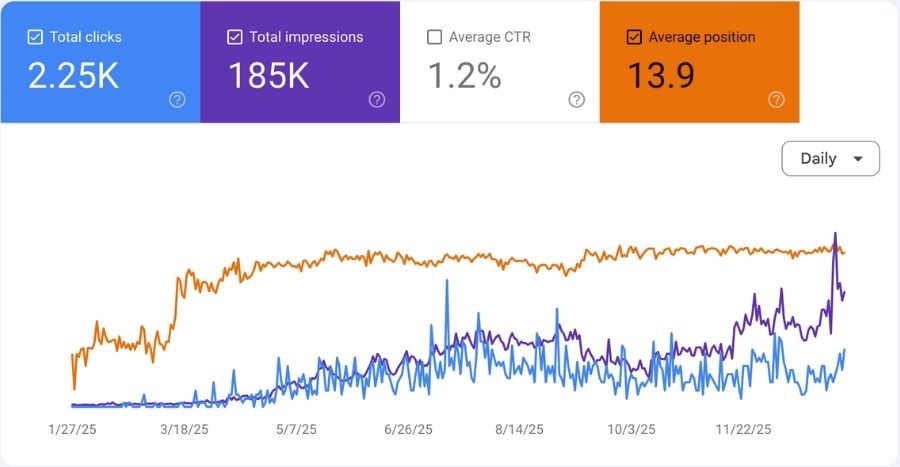
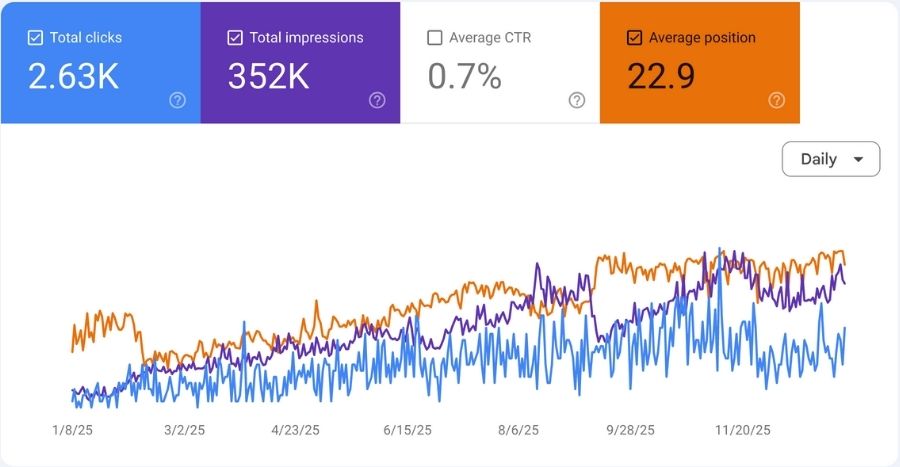
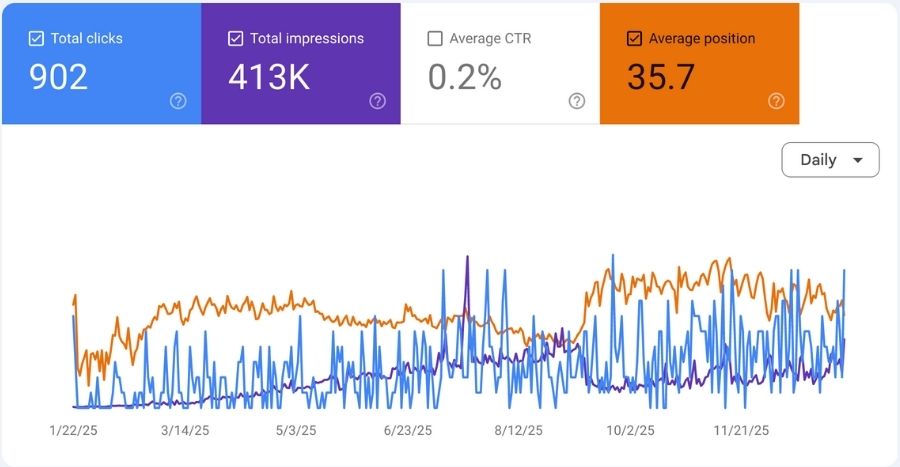
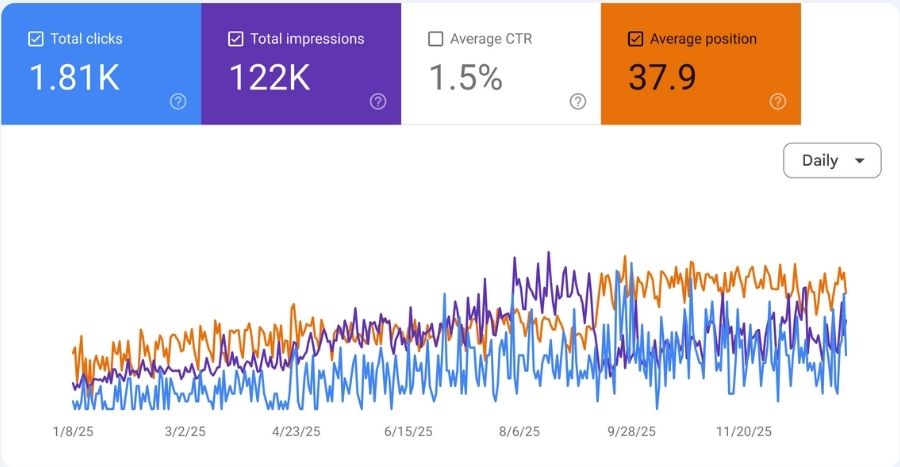
None of this counts for much if nobody finds the site. Below are Search Console screenshots from sites we have built, showing clicks and impressions over time.

Read the shape of the line rather than the numbers. A steady climb across job-type and suburb searches is what a carpentry site should look like.

Google Search Console performance data for a client tradie website
Google Search Console performance data showing clicks and impressions growth
Google Search Console performance data for a service business website
Google Search Console performance data showing rising search visibility
Google Search Console performance data for a trade business website

Your Work Photographs Well. Use It Properly

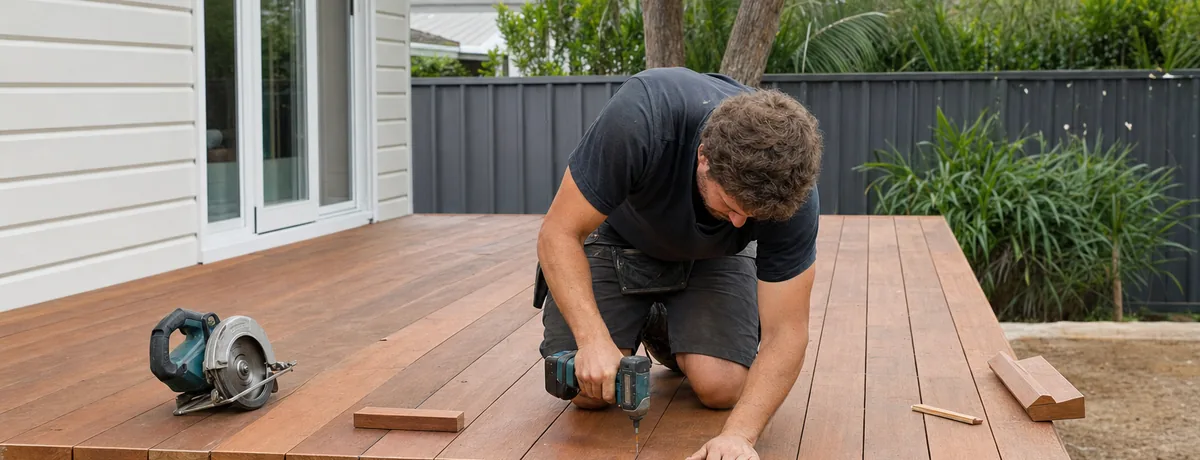
Carpentry is the easiest trade on this site to sell with photos. A plumber's finished work is behind a wall and a sparky's is inside a switchboard. Yours is the thing the customer wanted.

That advantage is wasted by a single grid of forty photos in upload order. These are the things that make it work.

  • Grouped by job, not by date

    Decks with decks, pergolas with pergolas, renovations with renovations. Someone imagining a deck should not have to scroll past three kitchens to find one.

  • The build, not just the finish

    A shot of the frame or the setout alongside the finished job shows a customer what they are paying for. Finished photos alone look like every other carpenter's.

  • Materials and spans, where it matters

    The timber, the decking profile, the fixings. It reads as unnecessary detail until you meet the customer comparing three quotes who wants to know why yours is different.

  • Your licence and insurance

    Structural and building work is licensed in most states. Your registration number, your public liability cover and how long you have been going, stated once and in plain words.

  • A page the builders can read

    Crew size, the work you subcontract for, the areas you travel to and your current availability. It is half a page and it is the half most carpentry sites are missing.

  • Reviews about the job, not the arrival

    A review about turning up on time does not help someone deciding on an extension. We group reviews by the type of work so people read about jobs like theirs.

What Goes On A Carpentry Website

Website design for carpenters follows a structure. Here are the six parts that matter most on a carpentry website, and what each one does.

  1. Under the hood

    Built so Google can read it

    Clean structure, proper headings, service and location markup, and fast loading. It is invisible on a carpentry site, and nothing you do later works without it.

  2. The top of the page

    The work you want, first

    If decks are the job you want more of, decks lead. A homepage that opens with ten equally weighted services tells a visitor you do a bit of everything, which is not what they are looking for.

  3. Service pages

    A page per job type

    Decks, pergolas, renovations, doors and trade carpentry each get their own page. People search for the thing they want built, and one services page cannot rank for all of them.

  4. Suburb pages

    A page for every suburb you cover

    Carpentry searches almost always carry a suburb on the end. Every area you cover gets a page of its own, naming the streets and suburbs around it.

  5. The quote form

    A form that asks the right things

    Job type, suburb, rough size and a photo of the space. Enough to give a real number instead of a call back that starts with twenty questions.

  6. The call bar

    A call bar that never leaves

    A bar fixed to the bottom of the screen on mobile, carrying your number wherever they scroll. Builders ring. They do not fill in forms.

Sites We Have Built

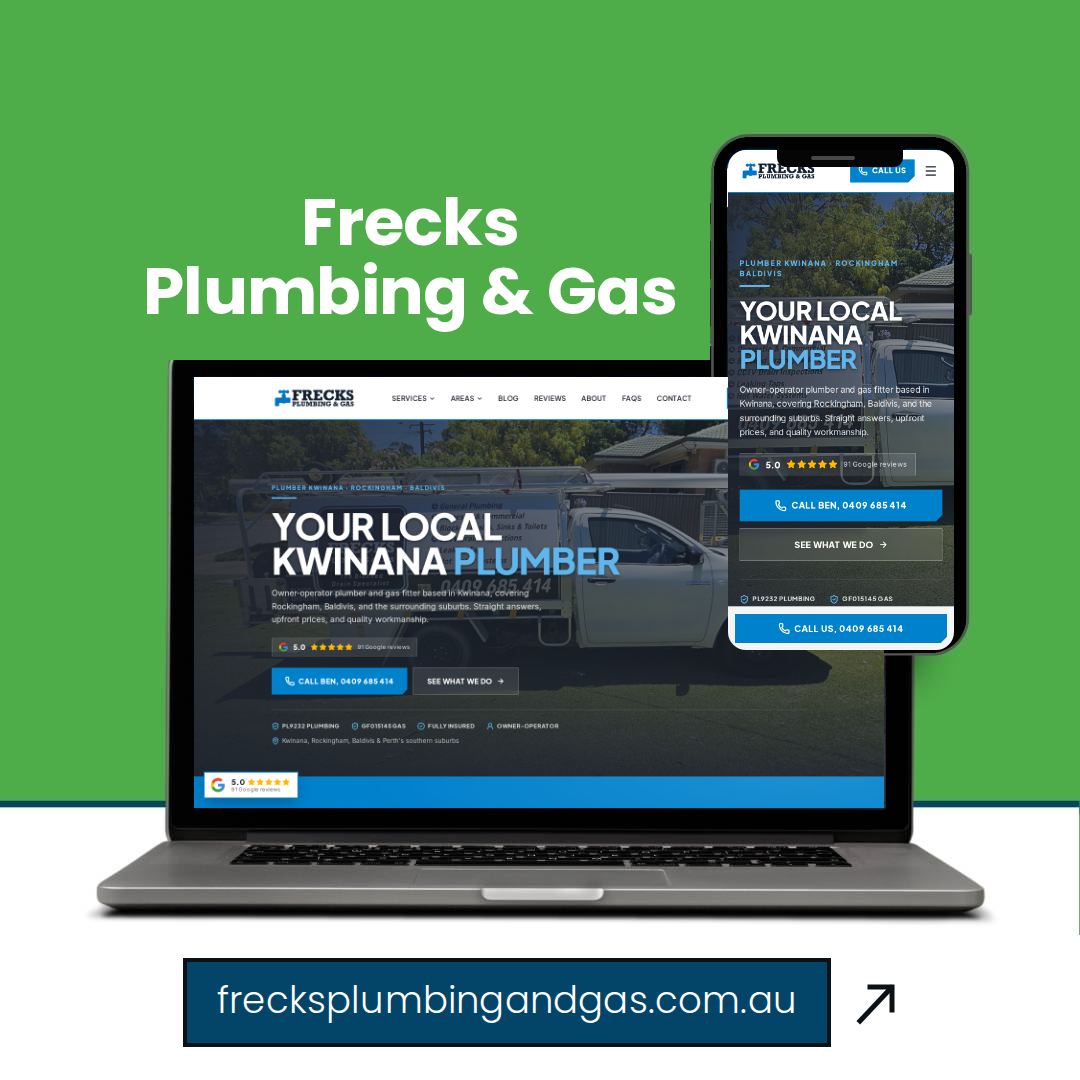
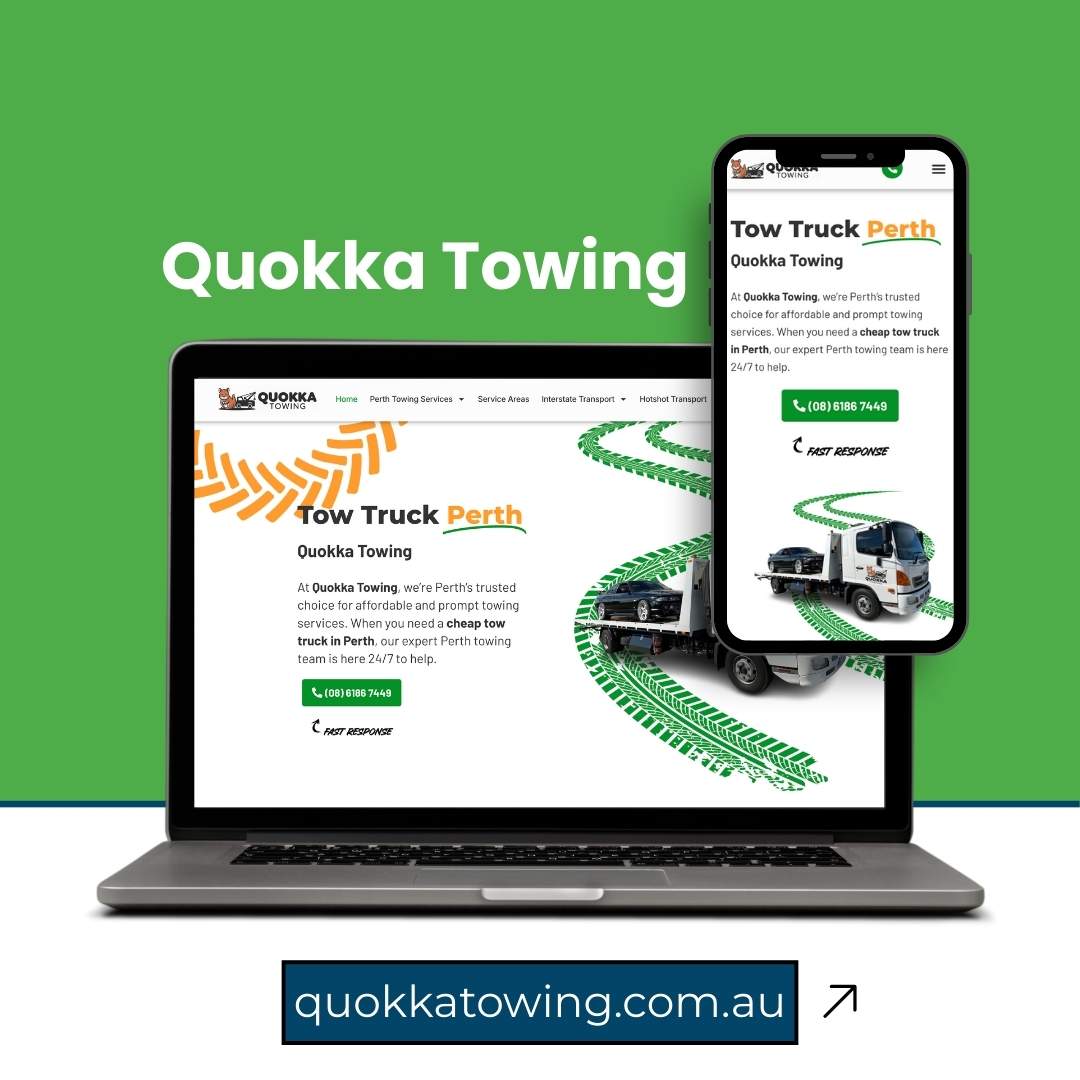
Recent websites we have built for carpenters and other trades. Each was planned around the jobs that business wanted more of, then the areas it covers.

5.0

on Google

What Our Clients Say

Want To Know What Yours Would Cost?

Tell us the work you want more of and the suburbs you cover, and we will come back with the structure and the price before anything starts.

How It Runs

Four steps, and the first one is the only one that needs much of your time.

  1. A short call

    We go through the work you want more of, your suburbs, and whether you take trade work. Usually fifteen minutes.

  2. Structure and content

    We plan the pages and calls to action around how carpentry customers search. You send us the photos and the details.

  3. Build and review

    We build the site and send it over for you to check. Changes are made before it goes live.

  4. Launch and hand over

    We connect your domain, check everything works and hand it over. Support after that is optional.

FAQs About Carpenter Website Design

Two things. The first is that carpenter covers six different businesses, from decks to structural framing to joinery, and a site that claims all of them reads as a handyman. Which one leads decides what enquiries you get.

The second is that half your work probably comes from builders rather than homeowners, and they want completely different information. Most carpentry sites are written only for the homeowner.

Every site is quoted on what it actually needs: how many job types you cover, how many suburbs you want covered, and what has to be built. You get the full price in writing before any work starts.

There is no lock-in contract. Ongoing services like support and hosting are quoted separately, so you can take them or leave them.

You get the first draft within 14 days. Most projects finish in two to four weeks, depending mostly on how quickly you can give feedback and get us photos.

It can say it, but it should not lead with it. A homepage that gives ten services equal weight tells a visitor you are a generalist, and generalists get the small jobs.

Lead with the work you want more of and let the rest sit behind it. You will still get the odd door hang, and you will get more of the jobs you were actually chasing.

Yes, and it is usually the gap worth closing. A builder looking for a subbie wants crew size, availability, the areas you travel to and your insurances, and none of that is on a site built for homeowners.

It is about half a page of content, and it makes you findable for a completely separate set of searches.

No. Phone photos of your own jobs beat professional photos of somebody else's every time, and that is what most carpentry galleries are.

What matters more than the camera is the order. Grouped by job type, with a build shot beside the finished one, ordinary photos do a lot of work.

Carpentry searches almost always include a suburb, so the areas worth targeting get a real page each rather than a list of names in the footer. Which areas, and how many, is part of what we scope and quote before anything starts.

How many are included depends on the size of the site, and we work that out on the first call.

It is built so it can. The structure, the headings, the service and location pages and the loading speed are all right from the day it goes up.

When it ranks is another question, and it depends on your area, who you are up against and what happens after launch. Anyone promising you a position by a date is guessing.

It is the biggest single factor in local carpentry search, and it sits beside the website rather than inside it. The two have to agree exactly on your name, address and phone, and the profile should point at real service pages instead of the homepage.

The site is built so that works. Whether we set the profile up as well is worth asking on the first call.

Yes. We connect the new site to your existing domain and email, or help you change them if you want to.

You tell us and it gets done. Phone number, a new service, updated hours, extra suburbs, all of it is covered.

Ongoing support is available if you want changes handled as a matter of course, and it is not compulsory. We go through how updates work on the first call.

Ready For A Carpentry Website That Books Work?

Tell us the work you want more of and the suburbs you cover, and we will come back with what the site would include and what it would cost.

No obligation, and no lock-in contract if you go ahead.

  • First draft in 14 days and you see it before anything else is agreed.
  • One written price covering the whole build, given before we start.
  • Nothing to sign up to afterwards. Support and hosting stay optional.

Would rather just talk it through?

1300 684 885
Call NowEnquire Now